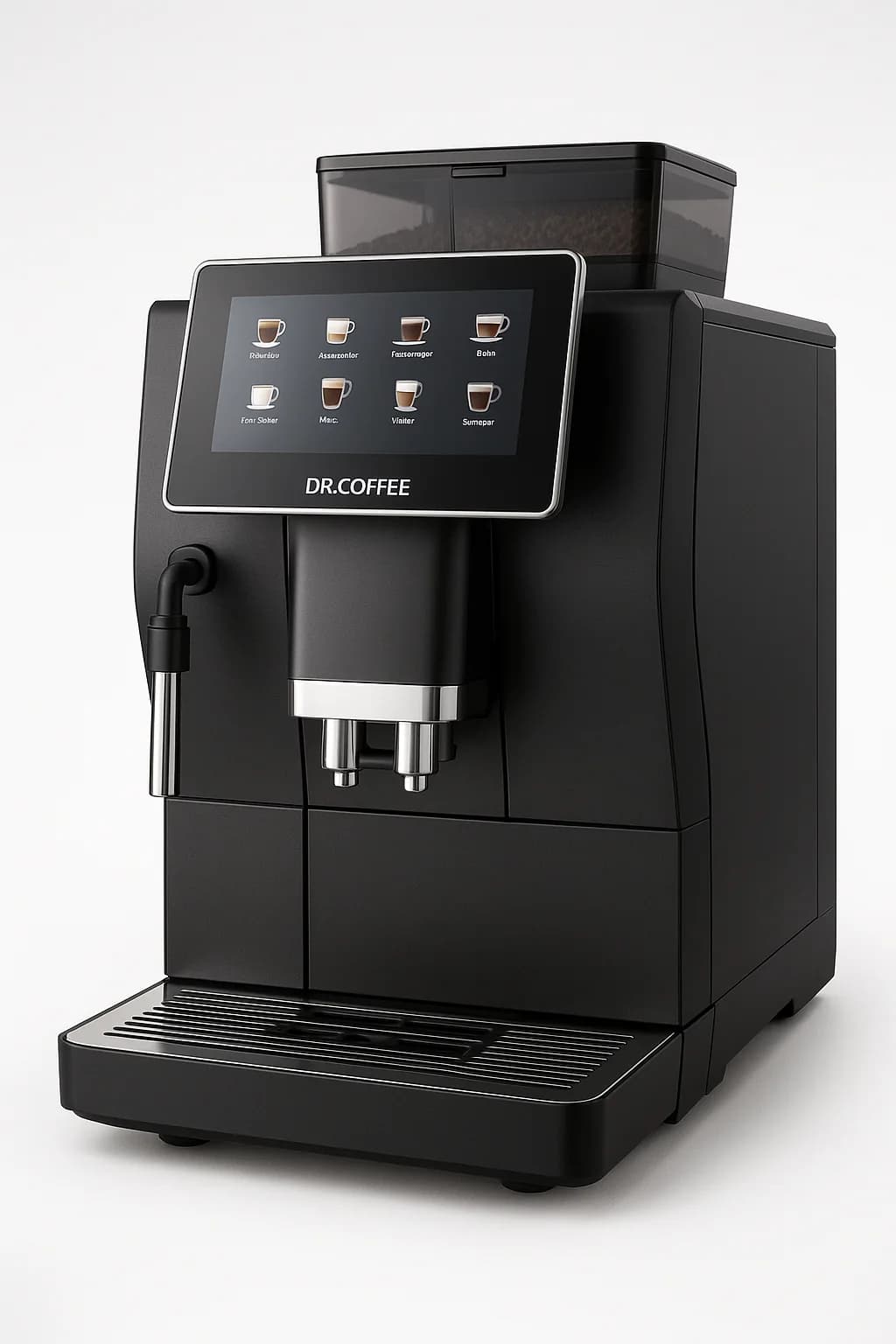
Managing a multi-site coffee-equipment fleet from one operational view
A fleet-management use case for corporate offices, hospitality groups, roasters and equipment owners responsible for machines across multiple locations.
Organisation
Fleet level
Sites
Drill-down view
Assets
Persistent history
Pilot required
No ROI claims
01 / Operational context
Why the existing process breaks down
A multi-site organisation may own or manage many coffee machines while service information remains local to each site, technician or supplier. The organisation can know what it purchased without knowing what is currently operating, repeatedly failing, awaiting work or approaching replacement.
No trusted fleet register
Machine counts, ownership, location and operating status can differ between spreadsheets and service-provider records.
Maintenance is managed site by site
Head office lacks one view of upcoming work, overdue activity and unresolved recommendations.
Costs are difficult to interpret
Invoices exist, but repair frequency and spend are not consistently connected to the individual asset.
Service quality varies
Different sites and suppliers may capture different levels of detail.
Machine moves break the history
When an asset changes site or service provider, its operational record may not follow.
Replacement decisions are reactive
Management sees the latest invoice rather than the accumulated pattern of service and downtime.
The fleet-management gap
Without a machine-level operating history, management sees a collection of service transactions rather than the condition, cost and risk of the fleet.
02 / Corexa response
A connected workflow around the machine
Corexa keeps the asset, service event, people, parts and next commercial action in one traceable workflow. The goal is not simply to digitise forms; it is to stop operational context from breaking between steps.
Onboard
Create the organisation, sites and machine register.
Assign
Connect assets, owners and service access.
Operate
Capture jobs, parts, recommendations and documents.
Monitor
Review health, open work and maintenance by site.
Decide
Use the history to investigate repeat faults and replacement candidates.
Capability, operational change and value
Organisation-site-asset hierarchy
Management can begin with the fleet and drill down to a site or machine.
The same data supports executive oversight and detailed investigation.
Persistent asset identity
The machine history stays intact when the asset moves or staff change.
Operational knowledge remains attached to the asset.
Fleet status view
Machine counts, alerts, maintenance and open work are summarised.
Management can find exceptions without reviewing every site manually.
Service-provider collaboration
Relevant technicians or service businesses can work with assigned assets.
External service activity can contribute to the owner’s long-term record.
Cost and repair history
Jobs, parts, quotes and invoices connect to individual machines.
Repeated spend can be evaluated in lifecycle context.
Reports and exports
Structured fleet information is available for management review.
Routine reporting becomes less dependent on assembling local spreadsheets.
03 / Evidence and measurement
What is supported — and what is not yet claimed
A credible case study distinguishes observed facts, product capability and future hypotheses. The evidence level is deliberately explicit.
Product capability
Corexa supports organisation, site and asset structures with machine history, service activity, maintenance, costs and reporting.
Operational relevance
The use case reflects the gap between buying a fleet and understanding its current condition and service risk.
Evidence boundary
No ROI, downtime reduction or replacement saving is attributed to a customer in this article.
Pilot readiness
A controlled pilot can begin with selected sites, a verified asset register and comparable service-history measures.
Not yet claimed
No verified ROI, fleet-wide downtime reduction or replacement-cost saving is claimed. Those outcomes require an agreed asset baseline, live service history and approved organisational evidence.
Measurement plan
Asset-register accuracy
- Evidence source
- Site confirmation against the Corexa register
- Credible reporting
- Percentage of assets with verified location, ownership and status.
Maintenance visibility
- Evidence source
- Scheduled, due and overdue records
- Credible reporting
- Open and overdue work by site and asset category.
Repeat-fault visibility
- Evidence source
- Machine-linked jobs and fault classifications
- Credible reporting
- Assets with repeated service patterns.
Cost traceability
- Evidence source
- Machine-linked jobs, parts, quotes and invoices
- Credible reporting
- Percentage of service spend attributable to a specific asset.
Fleet reporting effort
- Evidence source
- Timed monthly reporting task
- Credible reporting
- Hours required to produce the agreed fleet summary.
“Fleet oversight becomes useful when management can move from an exception to the exact machine history behind it.”
04 / Visual proof and rollout
Show the workflow, then verify the outcome
Visual credibility comes from real screens with precise captions. Each image should identify the user, the workflow stage and the evidence it proves.
Verify the register
Confirm each selected machine’s identity, ownership, location and operating status.
Capture consistent service data
Use the same machine-linked workflow for maintenance, faults, parts, recommendations and documents.
Review lifecycle evidence
Compare sites, repeated faults, open work and machine-linked costs before publishing outcomes.
Build the publishable proof layer
A focused pilot across a manageable group of sites can establish a trusted asset register before expanding across the full fleet.
Continue reading